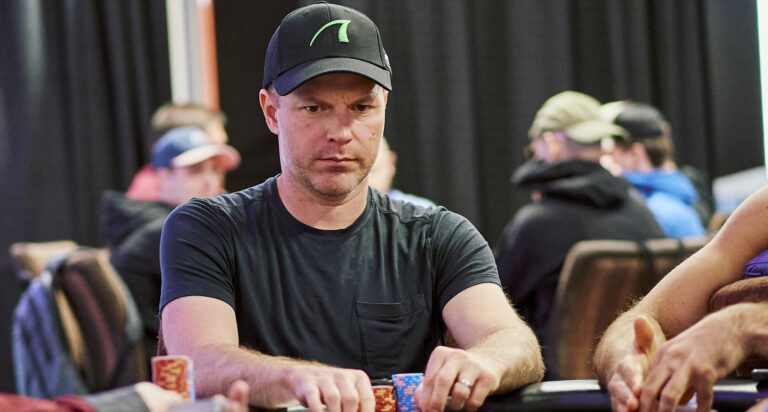
Mastering poker isn’t just about winning big hands—it’s about controlling your losses and playing smart when you’re out of position or holding marginal hands. In this hand breakdown, Jonathan Little illustrates how to navigate tricky spots and protect your stack.
Preflop Decisions
In a $1,000 buy-in tournament with 50-100 blinds and 30,000 effective stacks, a loose-aggressive player opened to 300 from the hijack. Little called from the big blind with 10♠10♣.
While three-betting is standard with premium holdings, calling is often better with hands like 10-10 or A-J against aggressive opponents. Why? These hands rarely flop the nuts and can be difficult to play post-flop out of position. Calling lets you limit risk while keeping the pot manageable.
Flop Play
The flop came Q♣9♣2♣, giving Little middle pair and a marginal flush draw. When his opponent bet 175 into 650, he check-called.
Check-calling is ideal here: you want to see a cheap showdown with marginal hands. Folding would be too tight, and check-raising is ineffective because your opponent is likely calling with stronger made hands or high-equity draws.
Turn Play
The turn was 8♠, and the opponent bet 600 into 1,000. Little called again.
The turn didn’t damage his hand significantly, and it added some straight possibilities. Check-calling remains the safest play: you continue to cap your losses while still having a chance to improve or catch your opponent bluffing.
River Play
The river came 3♦, and the opponent made a large bet of 2,100 into 2,200.
At this point, Little recognized a polarized betting range: the opponent either had a very strong hand (overpair, two-pair, set, flush) or was bluffing with busted draws. Little’s hero call was justified, thanks to blockers in his hand (the tens reducing potential flushes and straights).
His opponent revealed 8♥8♦, hitting a set. Little’s controlled line minimized his loss: he lost a reasonable amount while maintaining strategic discipline for future hands.
Key Takeaways
-
Cap your downside: Check-calling marginal hands reduces the risk of losing big pots out of position.
-
Consider blockers: Hands that block potential strong combinations can justify calls.
-
Focus on expected value, not every loss: Sometimes losing a small pot is part of the strategy if it prevents bigger losses later.
-
Adapt to your opponent: Analyze betting patterns and tendencies before making river decisions.
Level Up Your Game
Jonathan Little also offers free resources at Card Player Poker School, including:
-
Downloadable preflop charts
-
GTO preflop charts
-
Video classes and interactive hand quizzes
-
Free courses like Master The Fundamentals and The 25 Biggest Leaks and How to Fix Them
-
Weekly training
Check out his Five-Day Preflop Challenge for a structured approach to improving your preflop strategy and overall poker fundamentals.



Leave a Reply